Our B.S. in Quantitative Economics program is designed for students who love social science but also want to master the data analysis skills necessary to meet increased employer demand.

Bachelor of Science in Quantitative Economics

Student holding a pencil with data and graph images overlay

If you love working with data and solving real economic problems using math, modeling and analysis, UMass Lowell’s Quantitative Economics major is built for you.

This program emphasizes statistical methods, quantitative reasoning and economic modeling. You'll have the tools to analyze markets, forecast trends and evaluate complex systems.

Gain hands-on experience through the university’s co-op program and internships. You'll develop technical skills that prepare you for graduate school or careers in finance, consulting and data analytics.

What Can You Do with a Degree in Quantitative Economics?

Graduates from UMass Lowell's quantitative economics program are prepared to enter many fields in both public and private sectors, including consulting, finance, government, not-for-profits, law, medicine, academia and research institutions.

Person working on computer while looking at data charts.

Career Placements

  • Abt Bio-Pharma Solutions Inc.
  • BAE Systems
  • Bureau of Labor Statistics
  • Fidelity Investments
  • International Monetary Fund
  • Liberty Mutual
  • Massachusetts Department of Revenue
  • Putnam Investments
  • Tufts Health Plan
  • University of Rhode Island

Meet Our Students

Akbar Abduljalil speaks with two other students
Akbar Abduljalil '20
Economics

Motivated by the loss of a lake he had enjoyed as a child in his native Uzbekistan, economics major Akbar Abduljalil has taken on the role of president of the Student Society for Sustainability.

Until I came to UMass Lowell, I didn’t understand what I could do about the environment and what I was capable of.
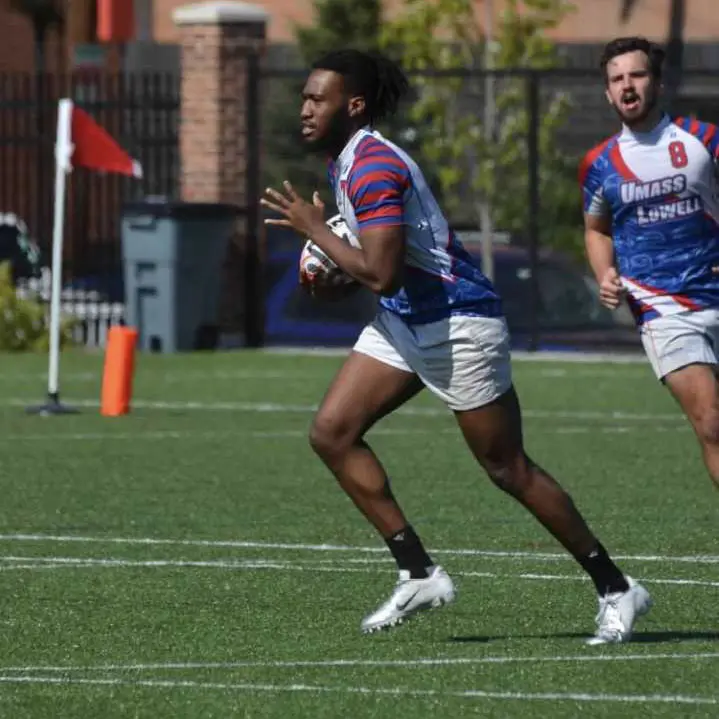
Marvens Francois playing rugby
Marvens Francois '21
Economics

Marvens Francois says switching his major to economics was one of the best decisions of his life.

I’ve always had this love for economic theory and the stock market and things like that, so I said, ‘I’ll give it a try’ – and I’ve never looked back.
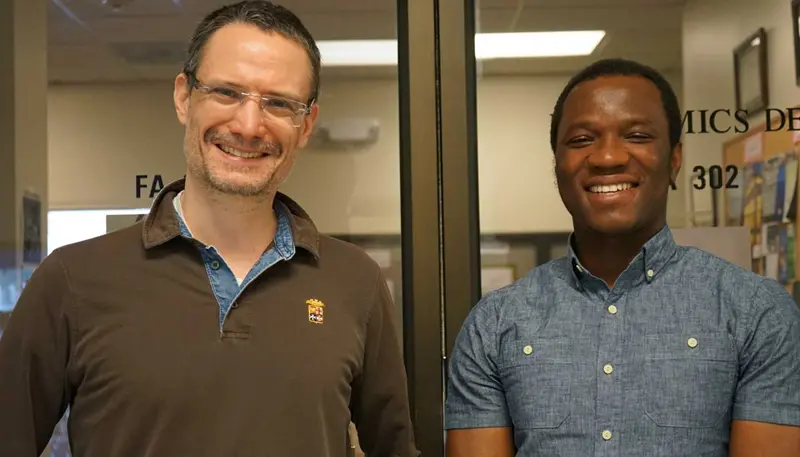
UMass Lowell student Wonder Ahiatsi poses with economics Professor Tommaso Tempesti.
Wonder Ahiatsi '23
Quantitative Economics

Wonder Ahiatsi chose UMass Lowell for its B.S. in quantitative economics.

I was interested in something that would allow me to make a data analysis and then explain it clearly, so it can have an impact on policy decisions.

Year-by-Year Course Plan

Check out our degree pathways, which offer sample plans for completing your degree in four years.

For students who entered fall 2022 and beyond.

Freshman Year

Fall Semester

Course NumberCourse NameCredits
ENGL.1010 /
HONR.1100
College Writing I /
First Year Seminar in Honors: Text in the City (CW)
3
ECON.2010Principles of Microeconomics3
FAHS.1090First Year Experience Seminar11
MATH.1230Precalculus Mathematics II (MATH)23
xxxx.xxxxSocial Sciences Perspective (SS)3
xxxx.xxxxArts and Humanities Perspective (AH)3
Total16

Spring Semester

Course NumberCourse NameCredits
ENGL.1020College Writing II (CW)3
ECON.2020Principles of Macroeconomics3
MATH.1310Calculus I (STEM)23
xxxx.xxxxArts and Humanities Perspective (AH)3
xxxx.xxxxSocial Sciences Perspective (SS)3
Total15

Sophomore Year

Fall Semester

Course NumberCourse NameCredits
ECON.3030Microeconomic Theory (AIL), (QL)33
ECON.2110Statistics for Business and Economics I3
xxxx.xxxxSocial Sciences Perspective (SS)3
xxxx.xxxxScience with Lab Perspective (SCL)3
xxxx.xxxxFree Elective3
Total15

Spring Semester

Course NumberCourse NameCredits
ECON.3040Macroeconomic Theory (CTPS)33
ECON.2120Statistics for Business and Economics II (IL), (WOC)33
ECON.3/4xxxEconomics Elective3
xxxx.xxxxFree Elective3
Total15

Junior Year

Fall Semester

Course NumberCourse NameCredits
ECON.3110Mathematical Economics3
ECON.4200Advanced Software for Economics3
xxxx.xxxxArts and Humanities Perspective (AH)3
xxxx.xxxFree Elective (DCA)33
xxxx.xxxxFree Elective3
Total15

Spring Semester

Course NumberCourse NameCredits
ECON.4070Econometrics3
ECON.3/4xxxEconomics Elective3
xxxx.xxxxSocial Sciences Perspective (SS)3
xxxx.xxxxFree Elective (SRE)33
xxxx.xxxxFree Elective3
Total15

Senior Year

Fall Semester

Course NumberCourse NameCredits
ECON.4300Analytical Economics3
ECON.3/4xxxEconomics Elective3
xxxx.xxxxFree Elective3
Total15

Spring Semester

Course NumberCourse NameCredits
xxxx.xxxxFree Elective3
Total15

Total Minimum Credits = 120.

1Required for entering freshmen in the College of Fine Arts, Humanities and Social Sciences.

2The required sequence of math courses (MATH.1230 and MATH.1310) assumes an ALEKS score between 61 and 75. If the ALEKS score is 76 or above, the student can take MATH.1310 directly. If the ALEKS score is 60 or below the student must first take MATH.1200. The ALEKS exam will be proctored. Students are encouraged to take additional courses such as MATH.1320, MATH.2210, MATH.2340, and COMP.1005

3Core Curriculum Essential Learning Outcomes in the major are met as follows:

  • Diversity and Cultural Awareness (DCA) is met by taking ECON.3020 or any other DCA course.
  • Information Literacy (IL) is met by taking ECON.2120
  • Social Responsibility and Ethics (SRE) is met by taking ECON.3450 or any other SRE course.
  • Written and Oral Communication (emphasizing Writing in the Discipline) (WOC) is met by taking ECON.2120
  • Critical Thinking and Problem Solving (CTPS) is met by taking ECON.3040
  • Applied and Integrative Learning (AIL) is met by taking ECON.3030
  • Quantitative Literacy (QL) is met by taking ECON.2010 or ECON.3030.

A major in Quantitative Economics consists of 42-54 economics credits with at least 18 credits at the 3000 level or above. Students transferring to the college and wishing to major in Quantitative Economics must make individual arrangements with the department chairperson regarding satisfaction of major course requirements. Students majoring in Quantitative Economics must maintain at least a 2.200 grade point average (GPA) overall and at least a 2.200 GPA in their economics courses.

No more than two Breadth of Knowledge courses can be taken with the same prefix. The Core Curriculum courses may be taken in any sequence. Refer to the Core Curriculum policy for further details. You should meet with your faculty advisor to determine how you will meet the Core Curriculum requirements.

Current UMass Lowell students should use their Advisement Report in SIS. If you need assistance, please contact your advisor.

Restriction on off-campus study:

Be advised that any course taken at another institution must be formally approved prior to enrollment.

See the catalog policy for details.

Breadth of Knowledge (BOK) Glossary

  • SS - Social Sciences Perspective - 9 credits
  • AH - Arts and Humanities Perspective - 9 credits
  • SCL - Sciences with Lab Perspective - 6 credits
  • STEM - Science, Technology, Engineering and Math Perspective - 3 credits
  • CW - College Writing I and II - 6 credits
  • MATH - Math Perspective - 3 credits

Read more about the Breadth of Knowledge requirements.

Essential Learning Outcomes (ELO) Glossary

  • AIL - Applied and Integrative Learning
  • CTPS - Critical Thinking and Problem Solving
  • DCA - Diversity and Cultural Awareness
  • IL - Information Literacy
  • QL - Quantitative Literacy
  • SRE - Social Responsibility and Ethics
  • WOC - Written and Oral Communication

Read more about the Essential Learning Outcomes.

  1. Evaluate the role of demand and supply in a market economy in allocating resources and shaping income distribution.
  2. Assess the determinants of aggregate output, unemployment, inflation, and evaluate the impact and uses of monetary and fiscal policy as related to aggregate economic activity.
  3. Assess the role that different market systems play in achieving allocative and productive efficiency.
  4. Identify the sources and consequences of market failures and the appropriate scope of government regulations to address them.
  5. Assess the role of government economic policies from the perspective of efficiency and distributional equity.
  6. Interpret economic data, draw appropriate inferences from economic studies, and critically evaluate claims based on empirical evidence.
  7. Apply economic theory to the framing and analysis of both individual and societal economic problems using graphs, algebra, and statistical methods.

Why Study Quantitative Economics at UMass Lowell?

Group of UMass Lowell students holding a "Barracuda Bowl" M2D2 poster.

Experiential Learning

Gain valuable work experience by participating in a co-op with employers, including:

  • Entegris 
  • Enterprise Bank 
  • MSF Investments 
  • Liberty Mutual  
  • UKG
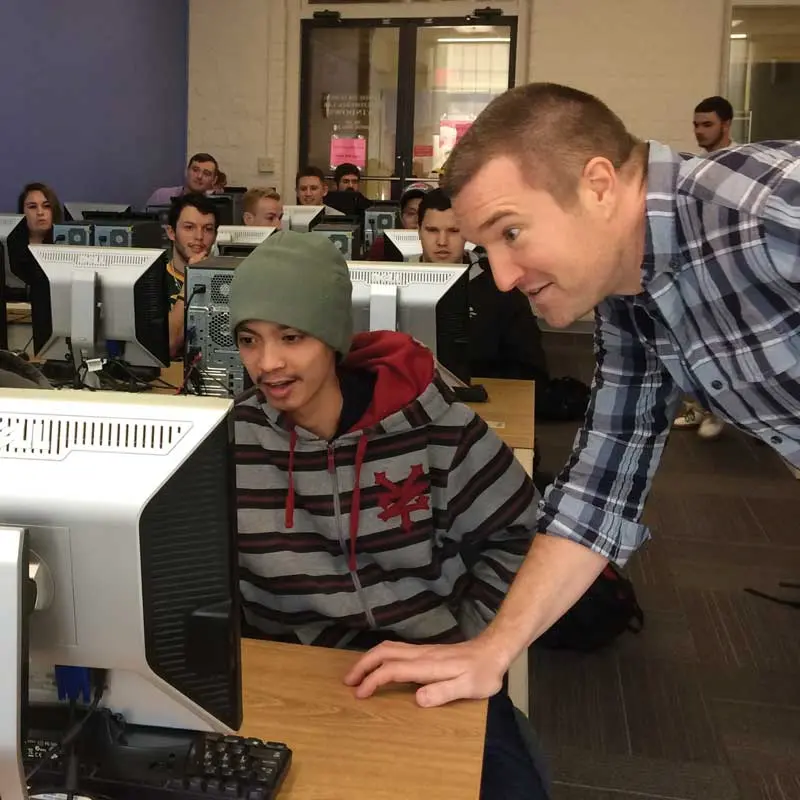
Students work at computers in an economics classroom at UMass Lowell.

Expert Faculty

Our economics faculty are actively involved in research and bring practical experience into the classroom from prior roles as investment bankers, program directors at research institutions and advisors at the Federal Reserve Board.

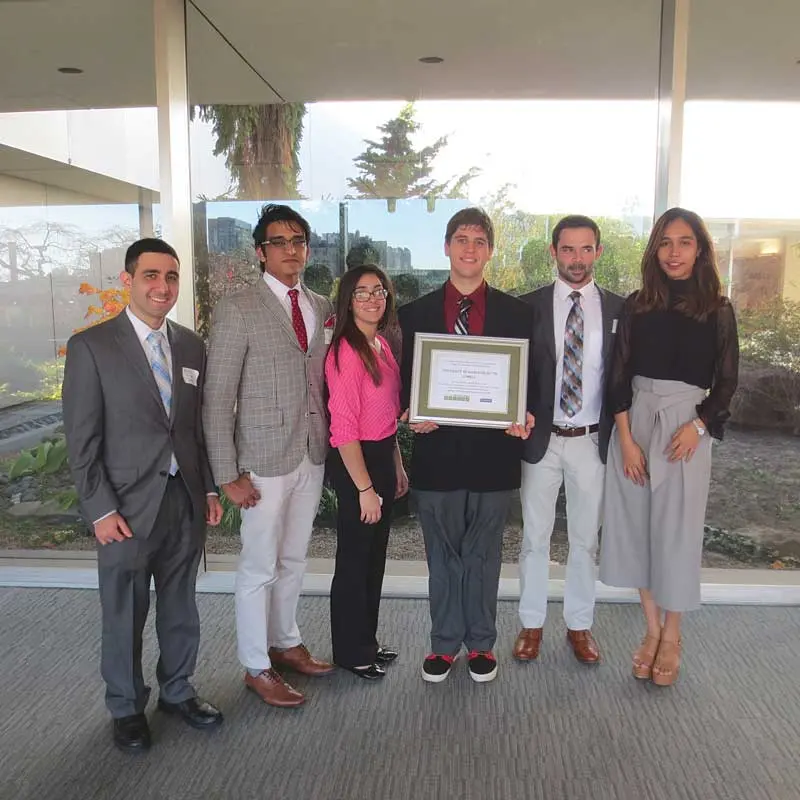
Economics students from UMass Lowell stand in a group with one student holding a framed certificate

Extracurricular Activities

Put your learning into practice.

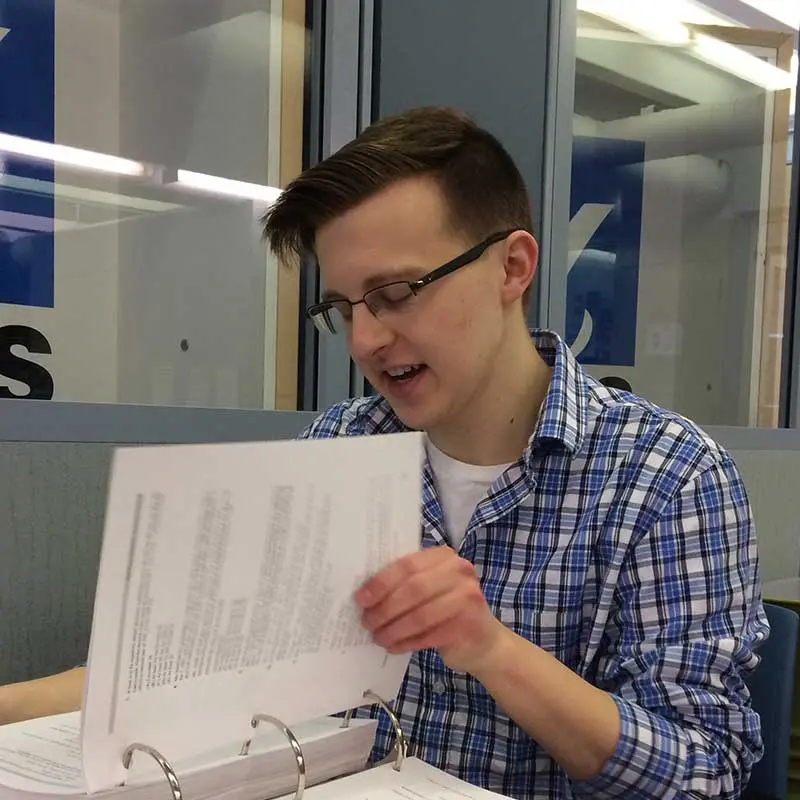
A UMass Lowell economics student reviews data in a notebook

Career Connected Experience: The UMass Lowell Guarantee

Every first-time, first-year UMass Lowell student will have the opportunity to pursue at least one Career Connected Experience (internships, co-ops, clinical placements, service learning, study abroad and more) during their undergraduate career — earning pay, credits or both before they graduate.

Visit UMass Lowell

Launch virtual tour

Visit campus, meet our people and picture yourself here. Find in-person and virtual tours and events.

Still Exploring Majors?

We've got 120+ programs. Browse our Program Finder to find the one that's right for you.

View All Programs